Top 10 Tips To Help Decide How Often You Should Test For PAT in Warwickshire
It is a common challenge for UK dutyholders to determine the appropriate frequency for Portable Appliance Testing. Contrary to widespread misconception, there is no mandated statutory interval–such as an annual requirement–specified in the Electricity at Work Regulations 1989. Regulation 4(2) sets out a general duty for electrical systems to be maintained to prevent harm. The legal burden is on the employer, or person responsible, to develop a maintenance plan through a structured evaluation of risks. Health and Safety Executive (HSE) strongly supports this risk based approach. This method moves away form blanket testing and requires that all intervals for inspection and testing be justified. The frequency of testing must be determined proactively by evaluating each piece of equipment and its environment. Users, past history and the previous use are also taken into consideration.
1. The Absolute Primacy of Risk Assessment
The frequency of testing is not prescribed by law but must be derived from a suitable and sufficient risk assessment conducted by the dutyholder. This document is the basis for your PAT test regime. The assessment should take into consideration all factors that might cause an appliance or device to become unsafe and then determine the frequency of testing and/or inspection to mitigate this risk. The HSE inspector will be expecting to see the assessment and will then judge the frequency of testing against the conclusions. This assessment is vital to the testing schedule.
2. Key Factors Influencing Testing Intervals
In order to establish a frequency that is acceptable, the risk assessment must evaluate and consider several factors. These include: Equipment Type: Class I appliances (e.g., kettles, toasters, power tools) require more frequent testing than Class II (double-insulated) appliances due to their earth reliance. Environmental: A harsh setting (such a construction area, workshop or commercial kitchen) will require more frequent tests than a more benign office. Users: If the equipment is being used by a trained employee, it may need to be tested less frequently than if it's being used by a public or untrained personnel. Appliance Construction: Robust equipment may be lower risk than equipment with a flexible cable that is prone to damage. Prior History: Appliances with a fault history will need more frequent checks.
3. Formal visual inspections are critical to the success of any project
Formal visual checks are part of a maintenance regime that is legally valid and often more important than combining inspections and tests. They can detect most faults including cable damage, loose connectors, casing damages, and contamination. For low-risk products in low risk environments (e.g. desktop computers in offices), a formal, visual inspection by an expert may suffice. There is no need for regular electronic testing. Risk assessment also determines the frequency of these formal checks.
4. First-Line maintenance and user checks
Before any formal process, user checks form the first line of defence. Dutyholders must encourage users to conduct a pre-use visual inspection for obvious signs of damage such as frayed cable, burn marks or loose parts. Promoting a culture that encourages user awareness may not be recorded in a formal PAT system but is still an important component of a holistic, risk-based approach. This can help identify potential problems between scheduled official inspections.
5. Guidance from the IET Code of Practice
The IET Code of Practice is not a law but it provides important guidance regarding recommended initial frequencies. It offers a comprehensive table suggesting intervals for different equipment types in various environments (e.g., commercial, industrial, public). Dutyholders can use this table as a robust starting point for their risk assessment. This table might recommend 3-monthly inspections of equipment at a construction site, but 24-monthly for the IT equipment used in offices. These initial recommendations will be revised based on the actual experience.
6. The concept of "Result Based Frequency Schedules"
For a truly sophisticated approach that is compliant, it's important to adjust the frequency of future tests based on results from previous tests. If an appliance, or a category of appliances, consistently passes its tests without fault over several years, the risk assessment can be reviewed to justify extending the testing interval. If an appliance or a category of appliances fails its tests frequently, it is better to shorten the testing interval. Enforcing authorities look favourably on this dynamic approach based on evidence.
7. New Appliances and Equipment
A common misconception is that all new equipment must be tested. While it may not need a formal combined test before first use, a formal visual inspection is still required to check for transit damage, correct wiring of the plug, and suitability for the UK market (e.g., a correctly fused plug). The risk analysis will determine when to test new equipment. It will be integrated into the maintenance schedule.
8. Renting or Borrowing equipment
PAT must be used for equipment that is brought on site, like hired tools or contractors' equipment. It is the dutyholder's responsibility to make sure that it is safe for use before using. Such equipment is usually subject to conservative risk assessments, which require an inspection and testing immediately before the first use.
9. Documenting the Rationale for Chosen Frequencies
Documentation is required to demonstrate compliance. The risk assessment document must include both the frequency and the rationale for the choice of appliance. This document serves as proof of "due diligence." It should refer to factors (environment/user, type of equipment) and, where appropriate, refer to IET Code of Practices, or results of previous tests to justify an interval.
10. Regular Review & Adjustment of Intervals
Risk assessments and the test frequencies they dictate are not static. Regulation 4 (Electricity at Work Regulations, 1989) requires ongoing maintenance. The dutyholder has to review the risks and the effectiveness testing intervals at regular intervals (e.g. once a year) or whenever there is a significant change. This ensures that the system remains proportionate and effective. Check out the top rated Warwickshire electrical equipment testing for more recommendations.

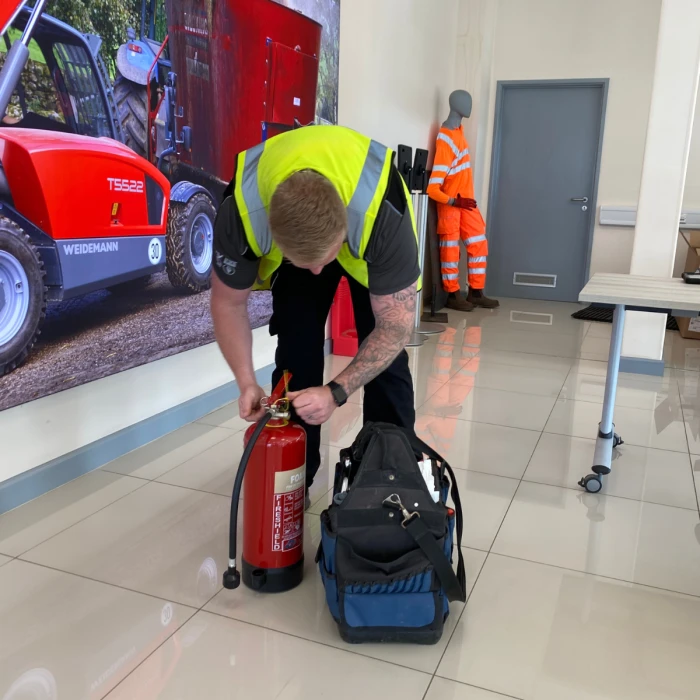
Top 10 Tips To Increase Transparency On The Fire Extinguisher Maintenance Costs in Warwickshire
The transparency in the cost of maintenance for fire extinguishers is not just about cost comparison. It's about managing risk and ensuring compliance. Pricing that is not accurate can conceal important compliance issues and create unintentional liability in the UK's strict regulatory framework, which is governed by the Regulatory Reform Order for Fire Safety in 2005. Transparent quotations provide a framework for the kind of service you can count on. They show the service's dedication to British Standards and ethical business practices, as well as their conformity to British Standards. The hidden costs or unclear line items aren't just financial concerns, but also red flags for possible compromises in the service quality and compliance documentation. Transparency in costs allows you to make informed choices that balance budgetary demands with the legally binding legal requirements of the fire safety law. This will prevent any unwelcome surprises or invalidation of insurance.
1. The breakdown of the cost of a service visit Parts, Labor, and Consumables in Warwickshire
A clear and transparent estimate will detail the costs for each service. An estimate for a regular service should include the labour cost of the engineer (his time on site) as well as the replacement parts (e.g. new seals and labels) and the consumables. This shows the provider doesn't cut corners by reusing seals and failing to properly recharge units. This also permits an honest comparison of different providers, since one cost may not include the essential components, which makes it fundamentally misleading.
2. Pricing Model Clarity: All-Inclusive vs. Pay-As-You-Go
The quote should state clearly the pricing model. The All-Inclusive Contract (or Fixed Price) should include one price for any scheduled service, including components, labor and refills. There are no hidden charges allowed on 5-years or 10-years services. In contrast, a Time-and-Materials model or Pay-as-You Go model will offer a lower annual service charge, but may be liable to significant additional sums for extended services once they are due. Transparency is the key to avoiding unexpected budgetary shocks following several years of a contract, and understanding the exact risk to financials lies (expensive overhauls).
3. Costs for extended service (5 & 10-year).
Most cost-related surprises occur when you have to increase the duration of your service. Transparent companies won't conceal future costs. They will provide in their quote a detailed price list, which will include the estimated cost of 5-year extended services (for powder or water foam) along with an inspection every 10 years and a CO2 pressure test for each extinguisher type. You can plan your budget for the entire duration of the contract and compare the price of an all-inclusive package against a pay-as-you go model.
4. The policy on replacement of equipment in Warwickshire
Transparency is essential in this regard. Quotes should include information about the policy of the service provider for extinguishers who have reached "beyond economical repair" (BER) status. This can include significant damage, corrosion or obsolete models. Are they able to provide a comparable replacement? What's the cost? Are there discounts for the old unit to be returned? If there is an inconsistency, the provider could use equipment condemnation to impose high replacement costs, and then make your compliance a target.
5. Additional and hidden fees Charges for Call-Outs, Mileage Administration in Warwickshire
It is important to look over the small print in order to see whether there are any hidden costs. Trustworthy companies will clearly mention these upfront. These fees are essential to know: Mileage fees (over the distance of a specific amount) as well as Call-Out costs for emergency situations (and the cost of these charges outside working hours), Administration fees (for processing documents or certificates) and parking/congestion fees (especially relevant in city centres). It's possible that a quote appears to be reasonable however it has not included the necessary costs. These will be added on your bill after.
6. Time of Validity and Price Conditions of the Guarantee in Warwickshire
Professional quotations will contain a clearly defined validity period (normally 30-90 days) that safeguards you against price increases after you've decided to sign the contract. A professional quotation should contain the details of the price guarantee and in the case of contracts with longer durations the guarantee period will be stated. The annual fee will be fixed for the duration of the contract? Will the annual fee increase according to an index such as CPI? Is it up for review annually at the discretion of the service provider? Transparent terms avoid disagreements and guarantee budget security.
7. Differentiated Pricing by Extinguisher Type and Size in Warwickshire
Pricing for service differs widely based on the size as well as kind. Transparent quotations will not include an all-inclusive price. It will itemise prices per unit and differentiate between an extinguisher for water that is 9 litres, an extinguisher made of CO2 that weighs 2kg, and a 6-litre wet chemical unit, for instance. This will provide a complete and precise evaluation of your particular inventory as well as the exact amount of work that is required.
8. Costs for documentation and certification in Warwickshire
A legally valid certificate of compliance has to be given. To include the cost of producing and distributing this vital documentation within the service fee the document must be listed. It should not be mentioned as a line item in a transparent quote or added as an "admin charge" in the final invoice. If a company is charging an additional fee to the proof that the work is done correctly is a sign of caution.
9. Payment Terms and Schedule in Warwickshire
The payment terms must be simple and reasonable. This is a hallmark of a reliable vendor. The quote should specify the frequency of the invoice (e.g. annual, quarterly, quarterly) and the payment method accepted, as well as the net payment terms (e.g. 30 days from invoice date). Additionally, it should be stated if the payment is payable in advance or at the time of completion. Avoid providers who require payment for the entire annual contract upfront before any service has been performed.
10. Comparison Framework for evaluating Quotes from Competing Companies in Warwickshire
When you're transparent it is possible to examine things in a similar way. The lack of certainty in quotes makes it difficult. It is possible to evaluate the cost of sustaining an extinguisher made of CO2 that weighs 2kg between companies A and B by requesting a thorough breakdown. Included in this is the cost of annual servicing and the estimated cost for its 10-year testing, and replacement costs if the extinguisher was condemned. Compare apples and oranges if you don't include these details. The lowest initial quote can be the most expensive long-term partnership with severe compromises to the safety and compliance. View the top rated Warwickshire fire extinguisher checks for more examples.